How extended-stay travelers can support local businesses and strengthen rural economies
When communities discuss economic development, attention often turns to major employers, new retail centers, and large commercial projects.
Yet one source of economic activity can be easy to overlook: recreational vehicle travelers.
RV resorts and extended-stay communities bring visitors who need many of the same goods and services as permanent residents. In rural communities, where small businesses depend on a relatively limited customer base, these additional customers can make a meaningful difference.
Visitors Who Spend Locally
An RV traveler staying in a community for several weeks may purchase groceries, dine at local restaurants, visit entertainment venues, schedule vehicle maintenance, and shop at nearby retailers.
Longer stays can generate recurring spending rather than a single burst of tourism activity.
A traveler who stays for three months may establish relationships with local businesses and return to the same establishments repeatedly.
For small businesses, that kind of customer loyalty can be particularly valuable.
An Opportunity for Local Partnerships
RV resorts can also serve as connections between visitors and the surrounding business community.
Restaurants might offer special promotions to resort residents. Local mechanics could provide RV maintenance services. Entertainment venues, shops, and service providers may find opportunities to reach travelers through community newsletters, events, or referral programs.
These arrangements can benefit both sides.
Resort residents gain convenient access to local services, while businesses reach customers who may otherwise be unfamiliar with the area.
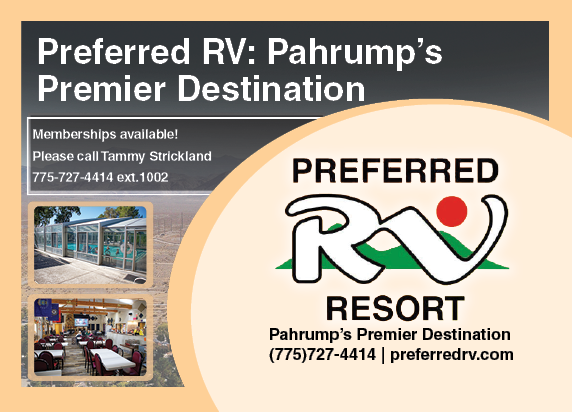
In Pahrump, properties such as Preferred RV represent potential points of connection between the visitor economy and local commerce.
The Value of Extended Stays
Traditional tourism campaigns often emphasize attracting as many visitors as possible.
But the length of a visitor's stay can be just as important as the number of arrivals.
An overnight traveler might stop for fuel and a meal before continuing down the highway. Someone staying for several weeks has more opportunities to explore local businesses, attend events, and participate in community activities.
This does not mean every extended-stay visitor spends more than every short-term traveler. Spending patterns vary widely.
Nevertheless, RV resorts can help communities develop a visitor economy that extends beyond quick stops and weekend trips.
More Than Tourism
Extended-stay visitors can also contribute to community life in less obvious ways.
Some volunteer with nonprofit organizations, attend local events, support fundraisers, or participate in civic activities.
Others may eventually decide to relocate permanently, purchase property, or establish businesses in the region.
In this way, RV tourism can become an introduction to the broader community.
A Practical Economic Development Strategy
For rural destinations such as Pahrump, supporting responsible RV tourism can complement other economic development efforts.
Well-managed resorts, accessible visitor information, business partnerships, and community events can all help create a positive experience for travelers.
The objective should not simply be to attract more RVs.
It should be to encourage visitors to discover what makes the community worth visiting, supporting, and perhaps eventually calling home.
When travelers become customers, customers become regulars, and regulars become neighbors, the entire community has an opportunity to benefit.
Plan one stop beyond the resort
A stay at a Pahrump RV park can include an afternoon exploring local shops. Visit Pahrump’s shopping directory lists Calvada Marketplace on Dahlia Street and Attic Fanatics on East Basin Avenue. If you run a local business, ask visitors where they’re staying and how they heard about you. Those answers can help you see which resort partnerships actually send customers your way.